
Oct 21, 2026
Types of Car Damage After an Accident in Florida and the Damages You Can Recover


Table of Contents
Let’s talk about the types of car damage after an accident. There is the physical damage to your car: dents, a bent frame, broken sensors, or a total loss. And there are the legal damages you can recover: money for your vehicle, your medical bills, your lost income, and your pain and suffering. This guide covers both. It explains the most common types of car damage after an accident, who pays for them under Florida’s no-fault system, and the three types of damages Florida law allows injured people to recover.
Quick answer: types of car damage after an accident
- Cosmetic damage: dents, scratches, cracked bumpers, and broken lights.
- Structural or frame damage: bent frame rails, unibody damage, and crumple zones that absorbed the impact.
- Mechanical damage: engine, transmission, cooling system, and fluid leaks.
- Suspension, steering, and wheel damage: alignment problems, bent wheels, and damaged control arms.
- Electrical and safety system damage: airbags, sensors, cameras, and driver assistance systems.
- Glass damage: windshields and windows, which may also house cameras and sensors.
- Total loss: repair costs are too high compared to the car’s value.
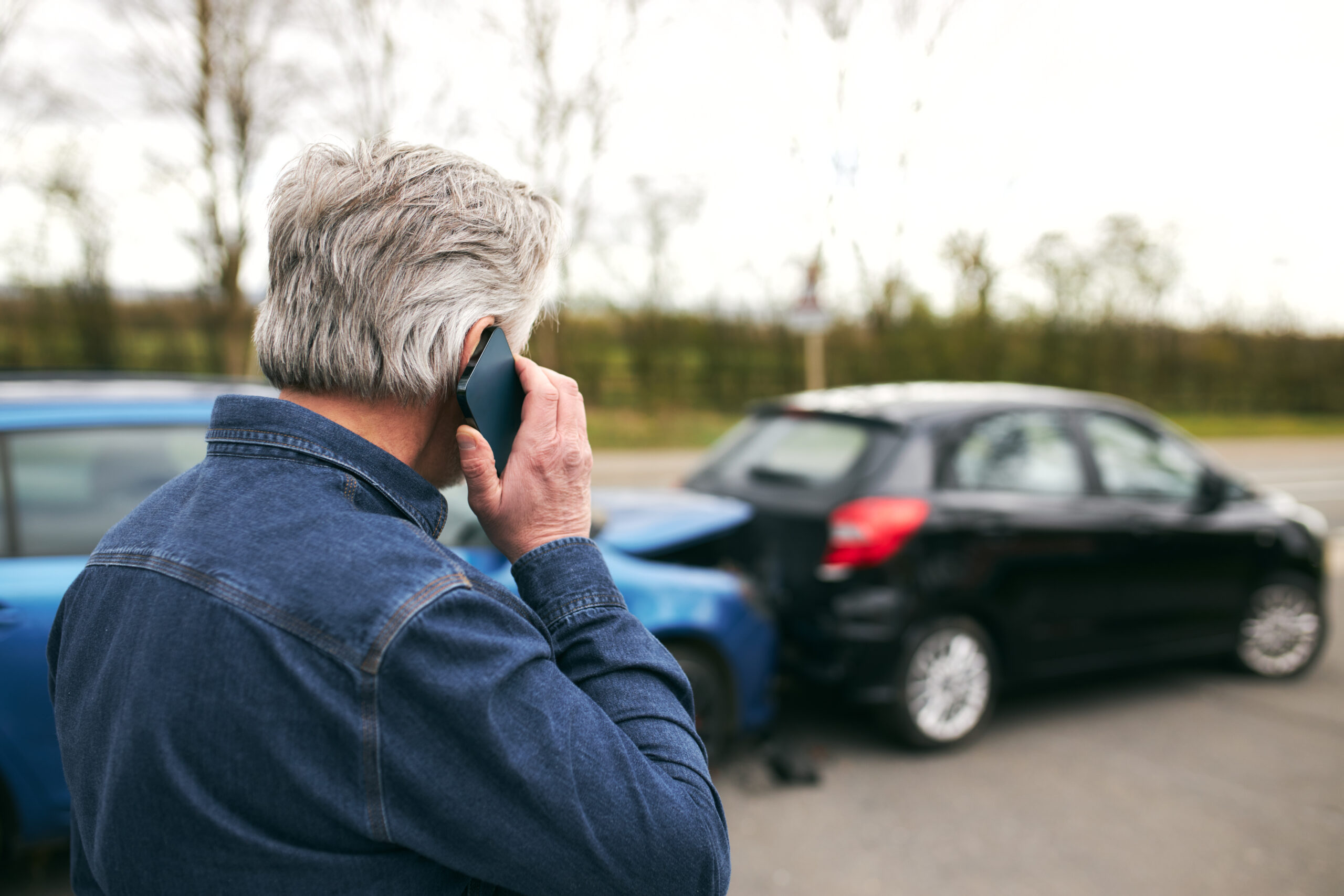
Types of Car Damage After an Accident
Not all car damage is visible. A bumper that looks fine can hide a cracked mount, a broken sensor, or a bent frame rail behind it. Knowing the types of car damage after an accident helps you ask the right questions when an insurer or body shop inspects your vehicle.
Cosmetic and Body Damage
Cosmetic damage affects the exterior: dents, scratches, paint damage, cracked bumper covers, and broken headlights or taillights. It is the most common type of car damage after an accident and usually the easiest to repair. Even so, a cosmetic estimate can grow once the shop removes the bumper and finds damage underneath
Structural and Frame Damage
Most modern cars use a unibody design, where the frame and body are one structure built to absorb crash energy. If that structure bends, the car may not protect you as well in a future crash, and panels may not line up correctly. Structural repairs require specialized equipment to measure and straighten the vehicle to factory specifications. Frame damage is also one of the biggest drivers of diminished value.
Mechanical Damage
A front-end collision can damage the radiator, condenser, engine mounts, or engine itself. Side and rear impacts can affect the transmission, fuel system, or exhaust. Warning lights, leaking fluids, overheating, or new noises after a crash are signs of mechanical damage that should be checked before you keep driving.
Suspension, Steering, and Wheel Damage
Hitting a curb or taking an impact to a wheel can bend rims, control arms, tie rods, or axles. Common symptoms include the car pulling to one side, a crooked steering wheel, vibration, or uneven tire wear. This type of car damage after an accident is easy to miss and can affect handling and safety.
Electrical, Sensor, and Airbag Damage
Newer vehicles rely on cameras, radar, and sensors for features like automatic emergency braking, lane keeping, blind spot monitoring, and adaptive cruise control. These components often sit in bumpers, mirrors, and windshields, so even a minor crash can damage or misalign them. After repairs, they usually need recalibration. Deployed airbags and seatbelt pretensioners must be replaced, which can add thousands of dollars to the repair.
Glass Damage
Windshields, side windows, and rear glass can crack or shatter on impact. In many newer cars, the windshield holds the forward-facing camera for driver assistance systems, so replacing it may also require calibration.
Hidden Damage
Some damage only appears once repairs begin. Body shops often find additional damage after taking parts off and will submit a supplemental estimate to the insurer. This is normal. Keep copies of every estimate and supplement.
| Type of car damage | Common signs | Why it matters for your claim |
|---|---|---|
| Cosmetic and body | Dents, scratches, cracked bumper, broken lights | Usually repairable; estimates often grow once parts are removed |
| Structural or frame | Panels that do not line up, doors that stick, uneven gaps | Affects crash safety and is a major cause of diminished value and total losses |
| Mechanical | Warning lights, leaks, overheating, new noises | Can make the car unsafe to drive and raise repair costs quickly |
| Suspension, steering, wheels | Pulling to one side, crooked steering wheel, vibration | Easy to miss; affects handling and tire wear |
| Electrical, sensors, airbags | Dashboard warnings, driver assistance errors, deployed airbags | Recalibration and airbag replacement can add thousands to the estimate |
| Glass | Cracked or shattered windshield or windows | Windshield replacement may require camera recalibration |
| Total loss | Repair cost close to or above the car’s value | Insurer pays actual cash value; car receives a salvage title |
Repairable or Total Loss: How Florida Decides
Not all types of car damage after an accident lead to a total loss. Insurers decide whether to repair or total a car by comparing the repair cost, and often the salvage value, to the car’s actual cash value (ACV) just before the crash. Under Florida law, a vehicle is treated as a total loss when an insurer pays the owner to replace it with one of like kind and quality. For uninsured vehicles, a total loss occurs when the cost to repair reaches 80% or more of the cost to replace the vehicle (Fla. Stat. §319.30(3)(a)). A totaled car receives a salvage title, which permanently affects its value.
If your car is declared a total loss, the insurer should pay its actual cash value, based on comparable vehicles in your area. You can challenge a low valuation with your own evidence, such as listings for similar vehicles, maintenance records, and recent upgrades.
Who Pays for Car Damage in Florida’s No-Fault System?
Florida is a no-fault state, but that rule applies to injuries, not vehicles. Your Personal Injury Protection (PIP) coverage pays for part of your medical bills and lost income. It does not pay to fix your car. Who pays for the different types of car damage after an accident depends on fault and on the coverage each driver carries.
- The at-fault driver’s Property Damage Liability (PDL). Every Florida driver must carry at least $10,000 in PDL. If the other driver caused the crash, their PDL pays for your repairs or the value of your totaled car, up to their policy limit.
- Your collision coverage. If you have collision coverage, your insurer pays for repairs minus your deductible, regardless of fault. It may then seek reimbursement from the at-fault driver’s insurer, and your deductible can often be recovered through that process.
- The at-fault driver personally. If the damage exceeds their PDL limit, the remaining balance may be recoverable from the driver.
Florida’s modified comparative negligence rule applies to vehicle damage claims too. If you are found more than 50% at fault, you cannot recover from the other driver. If you are 50% or less at fault, your recovery is reduced by your share of fault (Fla. Stat. §768.81(6)).
| Situation | Who pays for the car | What to know |
|---|---|---|
| Other driver at fault, has insurance | Their Property Damage Liability (minimum $10,000) | Damage above their limit may be recoverable from the driver |
| You have collision coverage | Your insurer, minus your deductible | Your insurer may recover from the at-fault driver; your deductible can often be recovered |
| You were partly at fault | Other driver’s PDL, reduced by your share of fault | No recovery from the other driver if you are more than 50% at fault |
| At-fault driver uninsured, no collision coverage | Possibly the driver personally | Florida uninsured motorist coverage generally covers injuries, not vehicle damage |
| Leased or financed car totaled | Payment usually goes to the lender or leasing company | Gap coverage protects you from owing the difference |
| Injuries from the same crash | Your PIP first, not your car | PIP never pays for vehicle damage |
Diminished Value and Loss of Use
A car with an accident history is often worth less than an identical car without one, even after quality repairs. That loss is called diminished value, and of all the types of car damage after an accident, structural damage usually has the biggest effect on it. In a claim against the at-fault driver, Florida law generally allows recovery of reasonable repair costs and, when repairs do not fully restore the car’s value, the remaining loss in market value.
You may also be able to recover the cost of a rental car or the loss of use of your vehicle while it is being repaired. Diminished value claims usually require an independent appraisal and are typically made against the at-fault driver’s insurer, not your own.
The 3 Types of Damages You Can Recover After a Car Accident
Vehicle damage is only one part of what you may recover. Florida law recognizes three broad types of legal damages in personal injury cases.
Economic Damages
Economic damages compensate you for measurable financial losses. They include past and future medical expenses, lost wages, loss of future earning capacity, property damage to your car and belongings, and out-of-pocket costs such as transportation to medical appointments. Since House Bill 837 took effect on March 24, 2023, evidence of past medical bills is generally limited to the amount actually paid, not the amount billed, and unpaid bills are measured by what insurance would pay or, in some cases, 120% of the Medicare rate (Fla. Stat. §768.0427).
Non-Economic Damages
Non-economic damages compensate you for harm that has no receipt: pain and suffering, mental anguish, inconvenience, scarring, loss of enjoyment of life, and loss of consortium. In car accident cases, Florida’s no-fault law generally requires a permanent injury, significant and permanent scarring or disfigurement, or significant and permanent loss of an important bodily function before you can recover these damages from the at-fault driver (Fla. Stat. §627.737(2)).
Punitive Damages
Punitive damages are rare. They are meant to punish intentional misconduct or gross negligence, not to compensate you for a loss. A jury decides whether to award them, and the claimant must prove the misconduct by clear and convincing evidence (Fla. Stat. §768.72 and §768.725). Florida generally caps punitive damages at the greater of three times compensatory damages or $500,000. The cap rises to four times compensatory damages or $2 million when the conduct was motivated solely by unreasonable financial gain, and there is no cap when the defendant had a specific intent to harm (Fla. Stat. §768.73).
The caps also do not apply to a defendant who was under the influence of alcohol or drugs (Fla. Stat. §768.736). That exception is especially relevant in drunk driving crashes.
The 3 types of damages after a car accident in Florida
| Type of damages | Examples | Florida rules to know |
|---|---|---|
| Economic | Medical bills, lost wages, lost earning capacity, car repairs or value, rental car | Medical bills proven by amounts paid, not billed (Fla. Stat. §768.0427) |
| Non-economic | Pain and suffering, mental anguish, scarring, loss of enjoyment of life | Car accident claims generally require a permanent injury (Fla. Stat. §627.737) |
| Punitive | Punishment for intentional misconduct or gross negligence | Jury decides; clear and convincing evidence; capped at 3x or $500,000 in most cases (Fla. Stat. §768.73) |
Examples of Economic and Non-Economic Damages in Florida Car Accident Claims
Medical Expenses
Emergency care, hospital stays, surgery, physical therapy, prescriptions, medical equipment, and future treatment your doctors expect you to need.
Wage-Related Losses
Lost wages while you recover, lost overtime and bonuses, lost employer benefits such as health insurance or 401(k) contributions, used sick or vacation time, and reduced earning capacity if your injuries limit the work you can do.
Pain and Suffering
Physical pain, emotional distress, anxiety about driving, sleep problems, scarring or disfigurement, and the loss of activities you enjoyed before the crash.
How to Document Car Damage After an Accident
Whatever types of car damage after an accident you are dealing with, strong documentation helps you get a fair repair estimate or total loss payment.
- Photograph everything at the scene from several angles, including both vehicles, the road, and any debris.
- Get a written estimate and keep every supplemental estimate the shop submits.
- Ask about sensors and calibration. Make sure the estimate includes recalibration of cameras and driver assistance systems if they were affected.
- Do not authorize a cheaper repair that skips structural or safety work to save money.
- Keep receipts for towing, storage, rental cars, and rideshares while your car is out of service.
- Get medical care within 14 days of the crash, even if your car damage seems minor. You must receive initial treatment within that period to use your PIP benefits (Fla. Stat. §627.736).
Frequently Asked Questions
What are the most common types of car damage after an accident?
The most common types of car damage after an accident are cosmetic body damage, structural or frame damage, mechanical damage, suspension and wheel damage, sensor and airbag damage, and glass damage. Some damage is hidden and only appears once repairs begin.
Does PIP pay for car damage in Florida?
No. PIP covers part of your medical bills and lost income. Damage to your car is paid by the at-fault driver’s property damage liability coverage or by your own collision coverage.
When is a car considered totaled in Florida?
A car is generally totaled when an insurer pays the owner to replace it because the repair cost, often combined with salvage value, approaches or exceeds the car’s actual cash value. For uninsured vehicles, Florida law uses an 80% of replacement cost test (Fla. Stat. §319.30).
Can I recover diminished value after a car accident in Florida?
Often, yes, in a claim against the at-fault driver. If repairs do not restore your car’s full market value, the loss in value may be recoverable in addition to repair costs. An independent appraisal is usually needed.
What are the 3 types of damages in a car accident case?
Economic damages (medical bills, lost wages, property damage), non-economic damages (pain and suffering, mental anguish, loss of enjoyment of life), and punitive damages, which are rare and reserved for intentional misconduct or gross negligence.
How long do I have to file a claim for car damage or injuries in Florida?
For most negligence claims arising on or after March 24, 2023, including injury and property damage claims, you have 2 years from the date of the accident to file a lawsuit (Fla. Stat. §95.11). Your insurance policy may also require prompt notice of the accident.
Talk to Bobby Núñez About Recovering Fair Compensation
If you were injured in a car accident in Florida, you may be dealing with car damage, medical bills, and insurers at the same time. At AccidentLawFirm.com, attorney Bobby Núñez personally handles every case. He will review your vehicle damage and injury claims, identify every available insurance policy, and pursue the compensation the law allows.
Our 5-Star Reviews Are No Accident. Call (305) 444-4407 for your free consultation, or contact us online. We serve clients in English, Spanish, and Portuguese, and you pay no fee unless we win.